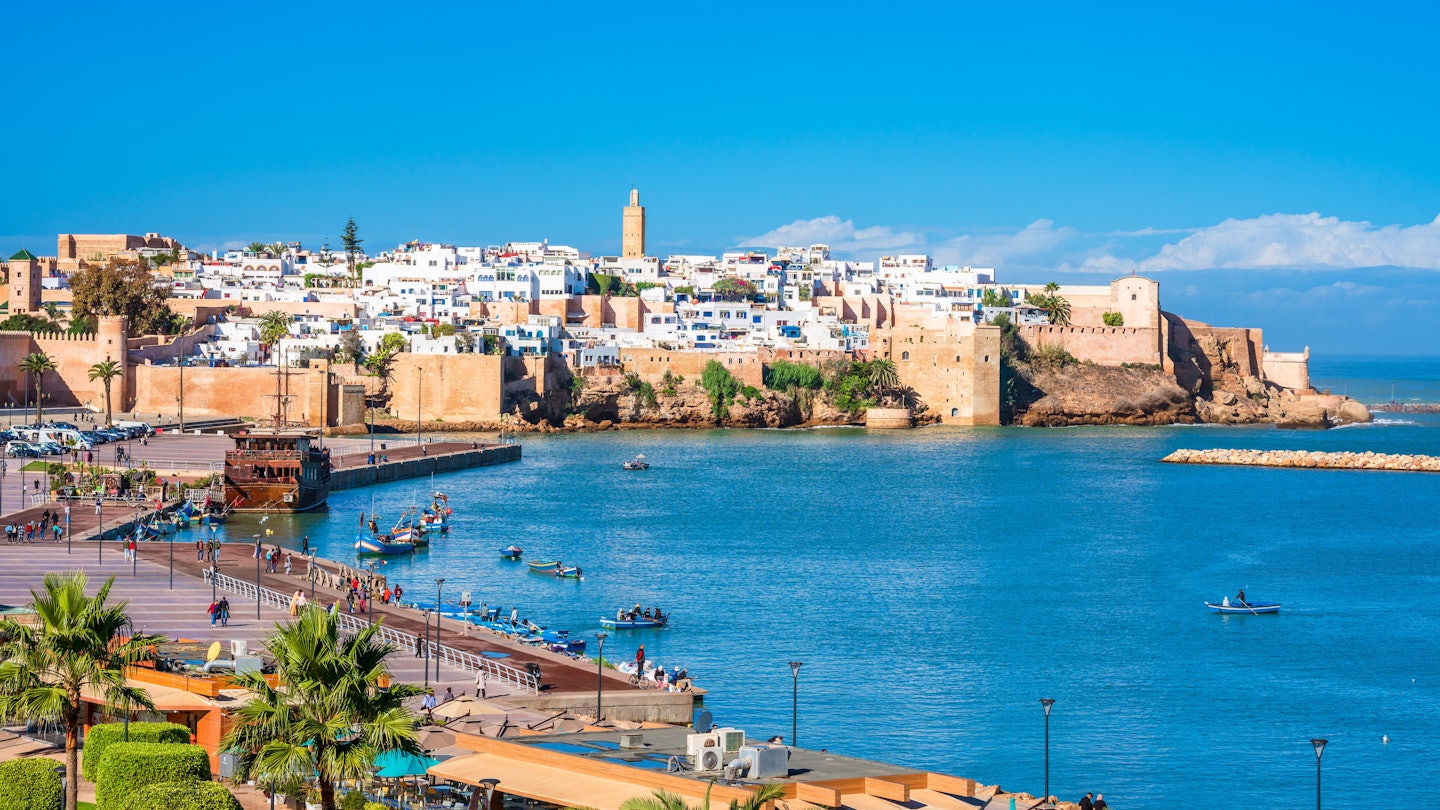
There's a moment in Rabat when the late-afternoon light hits the whitewashed walls of the medina and everything turns golden. The call to prayer drifts over the rooftops. Somewhere nearby, an artist is hunched over a laptop in a converted riad, working on a video installation about migration and memory. This is Le Cube — independent art room, and it's unlike any residency I've ever visited.
North Africa doesn't appear on most artists' residency shortlists. That's a mistake. The region sits at one of the most fertile crossroads in the world — Arab, Amazigh, Mediterranean, sub-Saharan African — and its art scene reflects that layering. If you're making work about identity, borders, language, ecology, or just looking for a place that will genuinely challenge your practice, start here.
Rabat, Morocco: Le Cube
Le Cube occupies a quiet street in Rabat's Agdal neighborhood, a short walk from the archaeological museum and the banks of the Bouregreg River. Founded by artists and curators invested in Morocco's digital art ecosystem, it's one of the few residencies in the region with a dedicated focus on new media — think video, sound, code-based work, and performance that bleeds into technology.
The residency runs for one to two months. You get a private studio, accommodation, and a small production budget. That last part matters more than it sounds — materials in Rabat are affordable, and the budget stretches further than you'd expect. Le Cube's curatorial team is hands-on without being prescriptive. They'll connect you with local artists and thinkers, help you navigate fabrication shops in the medina, and set up studio visits with Rabat's growing community of independent curators.
What makes Rabat special for artists is the texture of daily life. The city is Morocco's political capital but lacks the tourist intensity of Marrakech or Fez. You can walk the medina without being swallowed by it. The Kasbah of the Udayas overlooks the Atlantic — a 12th-century fortress where you'll find yourself sketching whether you meant to or not. On weekends, the train to Casablanca takes 45 minutes; Fez is three hours. Both are worth the trip.
Cairo, Egypt: Townhouse Gallery
If Rabat is the quiet residency, Cairo is the loud one — in the best possible sense. Townhouse Gallery sits in the heart of downtown Cairo, in a neighborhood that locals still call Wust El Balad. The building is a converted warehouse on a street shared with mechanics' shops and juice vendors. Step inside and you're in one of the Arab world's most important independent art spaces.
Townhouse's residency runs from one to three months. You get studio space, accommodation, and curatorial mentorship from a team that has been central to contemporary art in the Middle East for over two decades. The program is free — fully funded with a small stipend. Applications open annually, typically with a spring deadline.
Cairo as a studio city is overwhelming and addictive. The energy of 22 million people bleeds through the walls. Your work will respond to it whether you plan for it or not — the traffic, the architecture, the Nile, the layers of Pharaonic, Coptic, Islamic, and colonial history stacked on top of each other. I've met artists who came for one month and found ways to stay for six. The cost of living helps: a full meal in downtown Cairo can cost under two dollars. Studio materials are cheap and surprisingly diverse.
Townhouse also functions as a gathering place. Expect screenings, lectures, and openings that attract Cairo's creative community — filmmakers, writers, musicians, curators, activists. The cross-pollination is real. If you're the kind of artist who feeds off conversation, Cairo will overwhelm your notebook.
Beyond Rabat and Cairo
North Africa's residency landscape is still emerging, which is part of what makes it exciting. Keep an eye on Dakar — technically West Africa, but only a short flight from Casablanca, and home to Raw Material Company and Cité des Arts, two of the continent's most respected residency programs. The Sharjah Art Foundation in the UAE and Beirut Art Residency in Lebanon are also worth exploring if you're open to the broader MENA region.
For artists interested in the Maghreb specifically, watch for new programs. Morocco's cultural infrastructure has expanded dramatically in the last decade — the Mohammed VI Museum of Modern and Contemporary Art opened in Rabat in 2014, and the country's gallery scene stretches from Tangier to Marrakech to Essaouira. Tunisia and Algeria have active artist-run spaces that occasionally host residencies, though these tend to be more informal and require local connections.
Practical Notes
Visas: Morocco offers visa-free entry for most Western passport holders (90 days). Egypt requires a visa on arrival or e-visa, which is straightforward. Budget around $25 for the Egyptian visa.
Language: French and Arabic are the working languages in Morocco; Arabic in Egypt. English is widely understood in both art communities but learning basic French (Morocco) or Egyptian Arabic will deepen your experience considerably.
When to go: Morocco is best from October to May — summer in Rabat is hot but manageable; Cairo is brutal from June to September. Aim for fall or spring.
Getting around: Rabat has an efficient tram system and is very walkable. Cairo requires developing a relationship with ride-hailing apps (Uber and Careem both work) and a tolerance for traffic that will test your patience and reward your people-watching.
What to bring: An unlocked phone (Moroccan SIM cards are cheap), a power adapter (Type C/E in Morocco, Type C in Egypt), and an open schedule. The best things in both cities happen by accident.
North Africa isn't the easy residency choice. It's the interesting one. And right now, while the rest of the art world is focused elsewhere, that's exactly why you should go.
:max_bytes(150000):strip_icc():format(webp)/TAL-filled-tsa-tray-TRAVTREND0924-4a154717850343c088927dc828bd5d2e.jpg)