Something remarkable is happening in West Africa's art cities. Dakar, long anchored by the Dak'Art Biennale, has blossomed into a year-round art capital. Accra is booming — new galleries, international collectors, and a generation of Ghanaian artists who are redefining contemporary African art. Lagos has always been a creative powerhouse, even when the rest of the art world wasn't paying attention. And in smaller cities — Tamale, Kumasi, Saint-Louis — artist-run spaces are building infrastructure from the ground up.
For artists considering a residency in the region, the options are better than ever. Here are four that deserve your attention.
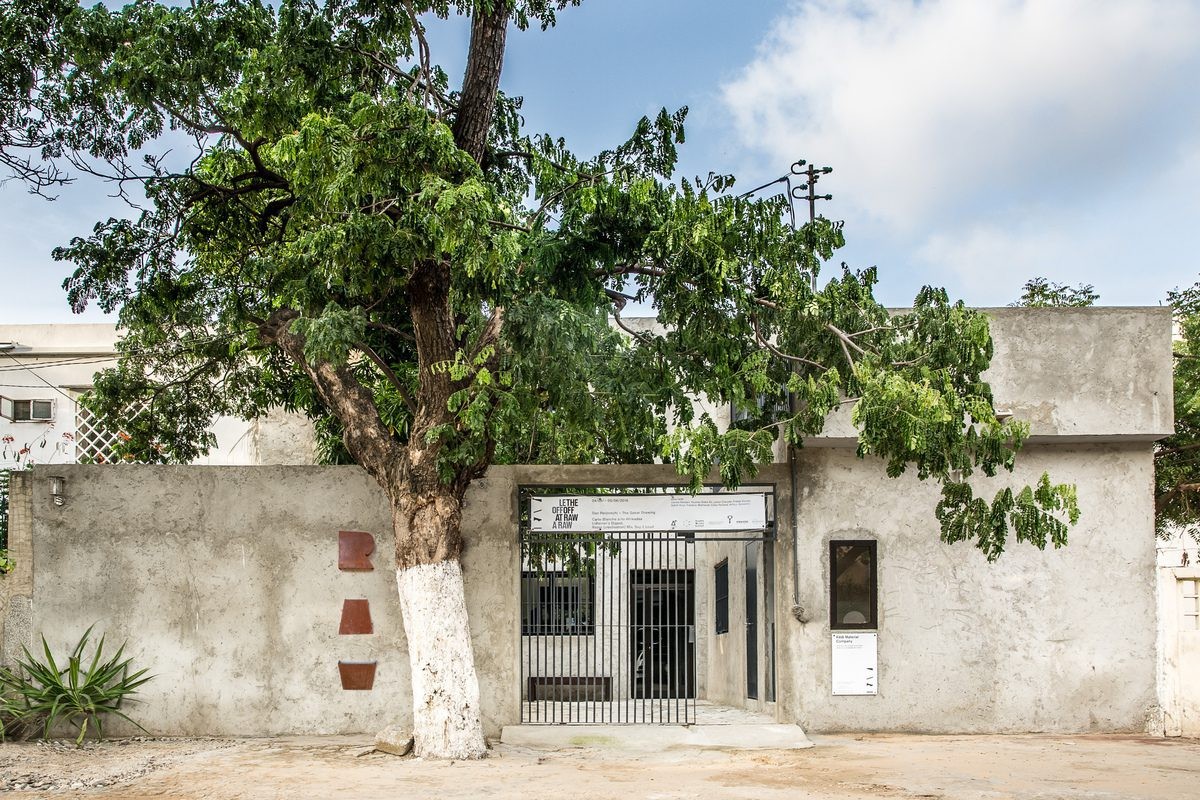
Raw Material Company — Dakar, Senegal
Raw Material Company is Dakar's intellectual engine room. Founded by the curator Koyo Kouoh (now director of the Zeitz Museum of Contemporary Art Africa in Cape Town), it operates as a center for art, knowledge, and society — part gallery, part library, part residency, part think tank.
The residency runs one to three months. Studio space, accommodation, and a living stipend are provided. What sets Raw Material apart is the rigor of its programming: residents participate in reading groups, public talks, and curatorial conversations alongside Dakar's community of artists, writers, and thinkers. If you're the kind of artist who reads theory and makes objects, this is your place.
Dakar itself is a revelation. The city sits on the Cap-Vert peninsula, the westernmost point of the African continent. The Atlantic is everywhere. The medina is dense and alive. The food — thieboudienne, yassa poulet, grilled fish on the Corniche — is extraordinary. And every two years, the Dak'Art Biennale transforms the city into a continental art event that draws curators and artists from across Africa and the diaspora.
Cité des Arts — Dakar, Senegal
If Raw Material is the intellectual residency, Cité des Arts is the maker's residency. Located in Dakar's artisan quarter, the program emphasizes collaboration between international artists and Senegalese craftspeople — metalworkers, weavers, glass blowers, woodcarvers.
Residencies run four to eight weeks. The program provides studio space, accommodation, and connections to Dakar's artisan workshops. Expect to get your hands dirty. The program is particularly well-suited for sculptors, textile artists, and ceramicists, though it welcomes all disciplines.
The artisan quarter itself is the attraction. Watching a master metalworker turn scrap into sculpture in 20 minutes will recalibrate your understanding of skill. The cross-cultural exchange is genuine and reciprocal — Senegalese artisans learn from you as much as you learn from them.
Sylt Foundation — Tamale, Ghana
Tamale is not Accra. Ghana's third-largest city, in the country's Northern Region, operates at a different pace and with a different cultural logic. The population is predominantly Muslim; the landscape is savanna rather than coast; the art traditions run through smock-weaving, pottery, and leatherwork rather than painting and installation.
The Sylt Foundation brings international artists into this context for two to eight weeks. Studios and accommodation are provided; there's a modest residency fee. The program emphasizes community engagement and skill-sharing — expect to visit workshops, markets, and festivals rather than galleries.
Tamale is the residency for artists who want to be genuinely destabilized by a new context. If your work is about material, craft, and community, this place will feed you in ways you can't predict.
Àsìkò Art School — Lagos / Accra / Addis Ababa (rotating)
Àsìkò isn't a traditional residency — it's a roving pan-African art school. Founded by the Centre for Contemporary Art Lagos, each edition takes place in a different African city. Past locations include Lagos, Accra, Addis Ababa, Maputo, and Dakar.
The three-week intensive brings together 20 emerging African artists and curators for workshops, critiques, studio visits, and lectures led by leading figures in African contemporary art. It's fully funded — travel, accommodation, and meals are all covered.
Àsìkò is for emerging artists committed to building careers within the African continent. The alumni network is extraordinary, and the connections made during those three weeks tend to become lifelong. If you're an African artist or curator — or an artist of the diaspora looking to deepen your connection to the continent — put Àsìkò at the top of your list.
The Bigger Picture
West Africa's residency ecosystem is growing fast, but it's still small enough that your presence matters. Unlike applying to MacDowell or Yaddo, where you're one of two thousand applicants, these programs often receive a few hundred applications. Your odds are better, and the experience is more intimate.
The region demands a different kind of preparation than a European or American residency. Read before you go. Learn some French (for Dakar) or basic local phrases. Bring an open schedule and a willingness to follow where the city leads you. The best work that comes out of West African residencies tends to be the work that surprised the artist who made it.
Africa's art future isn't being built in the commercial galleries of London or New York. It's being built in converted warehouses in Dakar, in artisan workshops in Tamale, in the restless energy of Lagos, and in the quiet ambition of artists who are tired of asking for permission. These residencies are where that future is taking shape.