The Mediterranean has been pulling artists south for centuries. Matisse chased the light to Nice. Picasso settled in Antibes. Cy Twombly spent his last decades in Gaeta. The coast between Barcelona and Istanbul is littered with the studios, graves, and love affairs of artists who came for a season and never quite left.
Today, three residencies along the northern Mediterranean offer something that feels increasingly rare: uninterrupted time to work in places so beautiful they border on absurd. Each one is different in character, but they share a quality that's hard to name — a seriousness about art combined with a deep pleasure in living.
Civitella Ranieri — Umbertide, Umbria, Italy
Civitella Ranieri is the one people whisper about. A 15th-century castle in the green hills of Umbria, roughly equidistant between Perugia and Città di Castello. The fellowship is nomination-only and ferociously competitive — around 15 fellows are selected from over a thousand applicants each year.
If you're chosen, everything is covered. International flights. Five weeks of room and board in the castle. A private studio. Your only obligation is to be present and to work.
The cohort model is central to Civitella's magic. Your fellow residents will include visual artists, writers, and composers. Dinners are communal, served in the castle's great hall with Umbrian wine from a nearby vineyard. Conversation happens naturally — you'll find yourself talking about Tarkovsky with a novelist from Lagos over breakfast, or workshopping an idea with a composer from Seoul on a walk through the olive groves.
The setting is rural and deliberately quiet. The nearest town, Umbertide, has a Saturday market and a few restaurants but not much else. You'll need the castle's shared car to go anywhere. This is by design — Civitella is a place for deep focus, not tourism. But the landscape itself is the attraction: rolling green hills, stone farmhouses, sunflowers in summer, truffle forests in fall.
Camargo Foundation — Cassis, Provence, France
If Civitella is the medieval castle, Camargo is the modernist villa. The foundation occupies a stunning property on a hillside above Cassis, a small fishing port tucked between Marseille and the limestone cliffs of the Calanques.
The Core Program runs for 11 weeks in fall. Fellows receive housing in individual apartments on the property, studio space, and a weekly stipend of €350 — enough to live comfortably in Cassis, where a café crème and a tartine still cost less than you'd fear. The foundation also covers round-trip travel.
Camargo's focus is broad: visual artists, writers, composers, scholars, and filmmakers are all welcome. The program has a particular interest in French and Francophone culture, and many fellows use the residency to pursue research that connects to Mediterranean history, ecology, or politics. The foundation's library is exceptional.
The Calanques are Cassis's secret weapon. These dramatic limestone inlets stretch for 20 kilometers between Cassis and Marseille — you can hike to them in 30 minutes from the foundation. Swimming in a calanque in October, when the tourists have gone and the water is still warm, is one of the great pleasures of a life in art. Marseille is 30 minutes by bus and offers everything Cassis doesn't: the MuCEM, the Friche la Belle de Mai, kebab shops at 2am, and the chaotic energy of France's most genuinely multicultural city.
Can Serrat — El Bruc, Catalonia, Spain
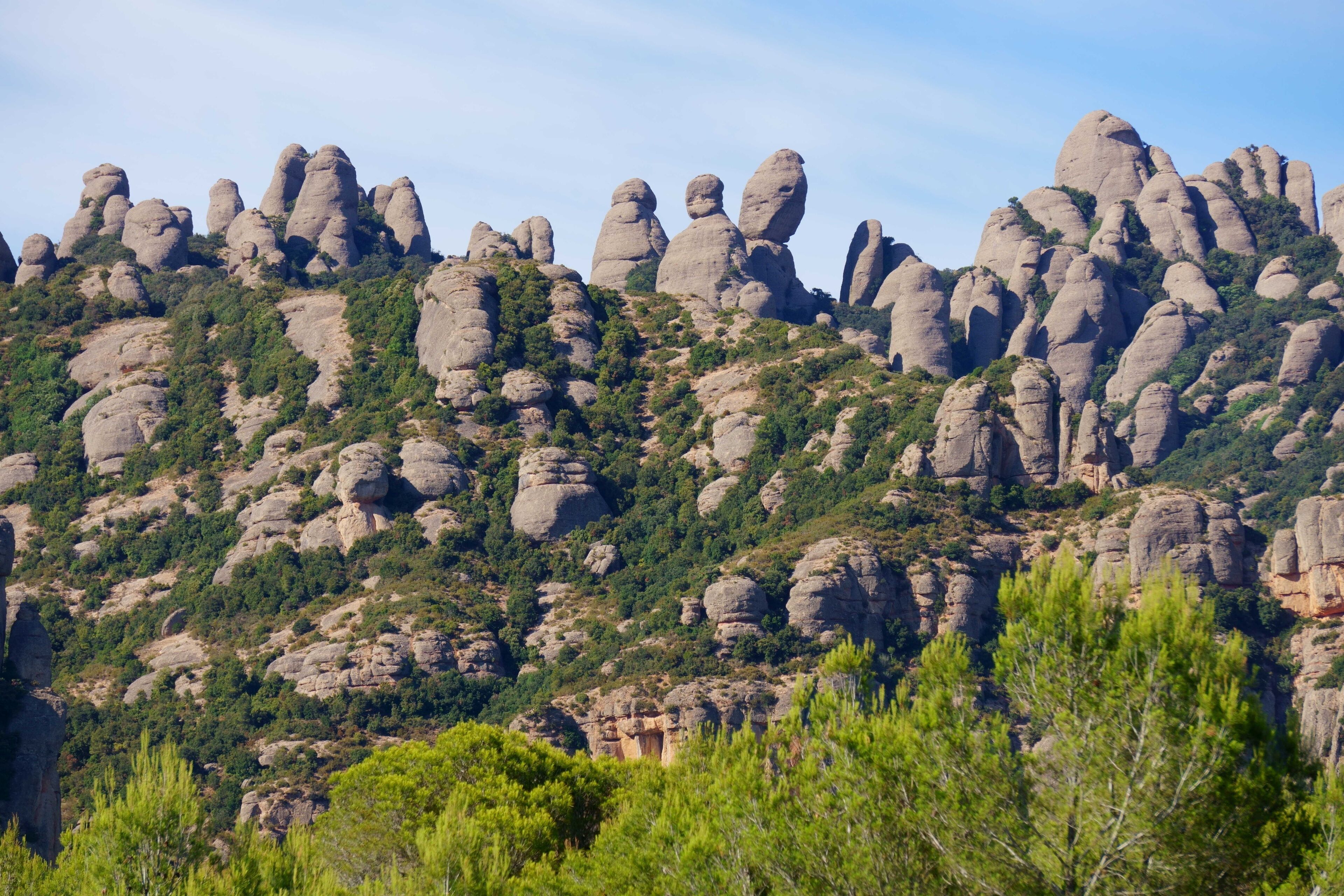
Can Serrat is the scrappy counterpart to Civitella and Camargo — less polished, more communal, and beloved by artists who've been there. The residency occupies a renovated 17th-century farmhouse at the foot of Montserrat, the dramatic serrated mountain that looms over the landscape 45 minutes northwest of Barcelona.
The program runs year-round and costs €550–€750 per month, which includes a private studio, shared accommodation, and optional communal meals. Reduced-fee spots are available — it's worth asking. Can Serrat hosts artists from over 40 countries each year, and the rolling admissions mean you'll share the farmhouse with a constantly shifting community of painters, writers, musicians, and interdisciplinary artists.
What Can Serrat lacks in prestige it makes up for in spirit. The atmosphere is collaborative and unpretentious. You cook together, eat together, share studio visits. The mountain is right there — you can hike to the monastery of Montserrat in a morning, and the trails through the surrounding natural park are stunning. Barcelona is an easy day trip for gallery visits, and the Costa Brava is an hour north.
The three programs form a kind of Mediterranean triangle. You could, in theory, do Can Serrat in spring, Camargo in fall, and Civitella the following summer — if the fellowship gods smile on you. Each one would change your work in a different way: Can Serrat through community, Camargo through research and landscape, Civitella through focus and the uncanny experience of making art inside a castle that has watched humans come and go for six hundred years.
The Mediterranean light doesn't lie. Something in it makes you want to work harder and live slower at the same time. That's the paradox these residencies understand, and it's why artists keep coming back.
:max_bytes(150000):strip_icc():format(webp)/TAL-filled-tsa-tray-TRAVTREND0924-4a154717850343c088927dc828bd5d2e.jpg)