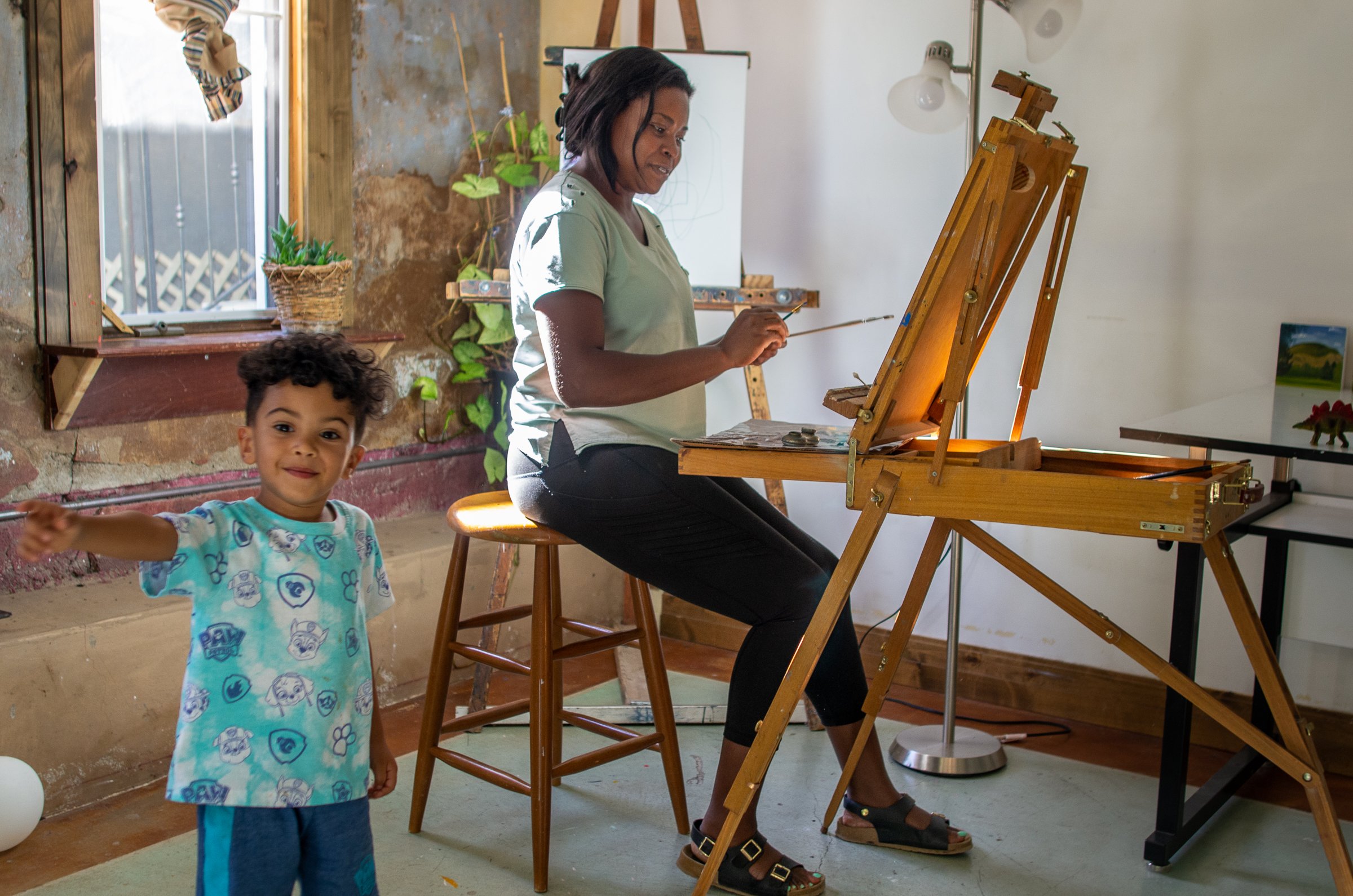
Picture the standard artist residency: four to eight weeks away from home, in a remote location, in housing built for one, with a culture that prizes uninterrupted solitude. Now picture an artist who is also a parent of young children, or who cares for an aging relative or a disabled partner. For that artist — a huge share of working artists, and disproportionately women — the standard residency isn't difficult. It's impossible.
This is one of the quietest exclusions in the field, and one of the most consequential. Entire bodies of work never get made because their makers couldn't disappear for a month. The programs that address it are discovering something: caregiver-friendly design doesn't just serve parents. It reaches an enormous, loyal, and largely uncontested pool of talent.
The exclusion is structural, not personal
It's tempting to frame caregiving as a private problem artists should solve on their own. But the barriers are built into how residencies are designed:
- Length. A six-week minimum is a non-starter for most caregivers. Shorter and flexible-length options change everything.
- Housing. Single-occupancy rooms assume the artist arrives alone. Family housing assumes they don't have to.
- Cost. Childcare during a residency can cost more than the residency saves, turning a "free" program into a net loss.
- Culture. A program whose unspoken norm is monastic solitude can make an artist with a kid in tow feel like an intruder.
None of these are laws of nature. They're choices — and they can be unchosen.
What leading programs actually do
The good news is that the field already has working models to copy. A handful of programs have built caregiving support into their structure, and the playbook is becoming clear:
Childcare stipends. Some programs — Women's Studio Workshop's parent residency is the often-cited example — offer dedicated stipends (in WSW's case, a weekly childcare allowance) so that the cost of care doesn't cancel the value of the residency. A stipend is often cheaper and more flexible than providing care onsite.
Family housing. Offering a unit where a partner or child can stay, even for part of the residency, removes the cruelest version of the choice between family and practice.
Flexible and shorter formats. A two-week option, or the ability to split a residency, or to arrive and depart around a school calendar, opens the door to artists who can't vanish for two months.
Partner- and child-welcome policies, stated explicitly. The single cheapest intervention is to say so. An artist won't ask "can I bring my kid?" if nothing on your site suggests the answer might be yes. Naming it in the open call does enormous work.
Pet-friendly options. Adjacent, but real: for many artists a pet is a care responsibility that quietly blocks long absences.
Make it searchable, or it doesn't exist
Here's the trap programs fall into: they offer some of this support but bury it in a FAQ, or handle it case-by-case without advertising it. From the artist's side, an unstated accommodation is no accommodation at all — they've already ruled you out and moved on.
This is precisely why RMAR added structured caregiver fields to every listing: childcare available, family housing, partner welcome, pet-friendly. If your program offers any of these, making them explicit and filterable means the artists who need them can finally find you. Right now, a parent searching for a residency they can actually attend has almost no way to filter for one. The first programs to surface this clearly won't just help those artists — they'll capture their loyalty.
The business case, plainly
If ethics aren't motivation enough, consider the strategy. Caregiver-friendly artists are an underserved market with intense word-of-mouth networks. A program known as the one parents can attend earns a reputation that money can't buy and competitors can't easily copy. You're not lowering your bar; you're widening your pool to include extraordinary artists the field has been quietly turning away for decades.
Most residencies will keep being designed for the artist with no one depending on them. That's exactly the opening. Be the program that did the obvious, humane, overdue thing first — and say so loudly enough that the artists who need it can hear you.
RMAR lets programs flag childcare, family housing, partner-welcome, and pet-friendly policies so caregiving artists can filter for them directly. List or update your program to make your support visible.